
Drug Discovery and Development Platform
Skip to
Calls
Our offer
Achievements, testimonials and exits
Featured publications
The Drug Discovery & Development platform (DDD) works together with principal investigators (PIs) primarily at Swedish universities to generate prototype drugs based on their proposed therapeutic concept.
We offer industry-standard infrastructure, expertise, and strategic support for technology development or to help progress projects towards a preclinical proof-of-concept. We work with small molecules, human antibodies, oligonoucleotides and new modality therapeutics for polypharmacology and cell therapeutics.
Contact us to discuss your project idea at:
dddprojectproposal@scilifelab.se
Calls
Calls for projects now open! Call closes October 19 2026
Through the Enabling Drug Discovery (EDD) initiative, the combined capabilities of SciLifeLab DDD, CBCS and MAX IV offer academic researchers an integrated workflow for early-stage target-based drug discovery. The support includes expert support on assay design, technology transfer and hit verification, together with access to complementary discovery approaches.
Our offer
Services are offered in the following areas:
- Consultation meetings in matters related to Drug Discovery (unit TPP&DSA)
- Access to and logistics solution for compound management (units MCH2L and MCLI in collaboration with Chemical Biology Consortium Sweden)
- A first draft for Target Product Profile (unit TPP&DSA in collaboration with RISE, Södertälje for Drug Discovery Toxicology)
- Protein production for assay development and therapeutic proteins (unit TPE)
- Cell Line Development in CHOZN® GS-/- and CHOZN® CHO-K1 cell lines from Merck Life Science
- Selections of protein/peptide ligands made in phage display libraries of antibody fragments (units D&S and TPE)
- Selections of small molecule ligands made in DNA encoded compound libraries (units MCLI and TPE)
- Medicinal synthetic and computational chemistry (units MCH2L and MCLI)
- Medicinal synthetic chemistry for oligonucleotide chemistry (unit ON_Chem)
- Design and screening of oligonucleotide libraries (unit ON_Bio)
- Analysis of drug metabolism and pharmacokinetics data (unit ADMEoT)
- Assay development and establishment of structure activity relation (SAR) in primary assays (units BCA and ON_Bio)
- Biophysical and structural studies of ligands to target molecules (unit BSC)
- Advice on design of preclinical proof of concept studies, PK and PK/PD studies (units TPP&DSA and ADMEoT)
Swedish academic users pay for consumables. A full-cost model is applied for industry and international academic users. DDD programs are prioritized biannually by the DDD national steering board. DDD service projects (commissioned research) can be taken in when spare resources are available at the platform and decisions on inclusion are taken by the DDD management team biweekly. Importantly, the researcher/customer retains all rights and ownership during this process.
For the latest updates, please follow us on LinkedIn.
Activation of potassium channels
Bridge collaboration project on cell line development
Activation of potassium channels
“SciLifeLab Drug Discovery & Development project owner and SciLifeLab board member Professor Fredrik Elinder was interviewed in the ionchannellibrary. He outlines the challenge of undertaking and funding drug discovery efforts in academia, the need for high-throughput ion channel measurements, and ultramarathons – all in one place.
Bridge collaboration project on cell line development
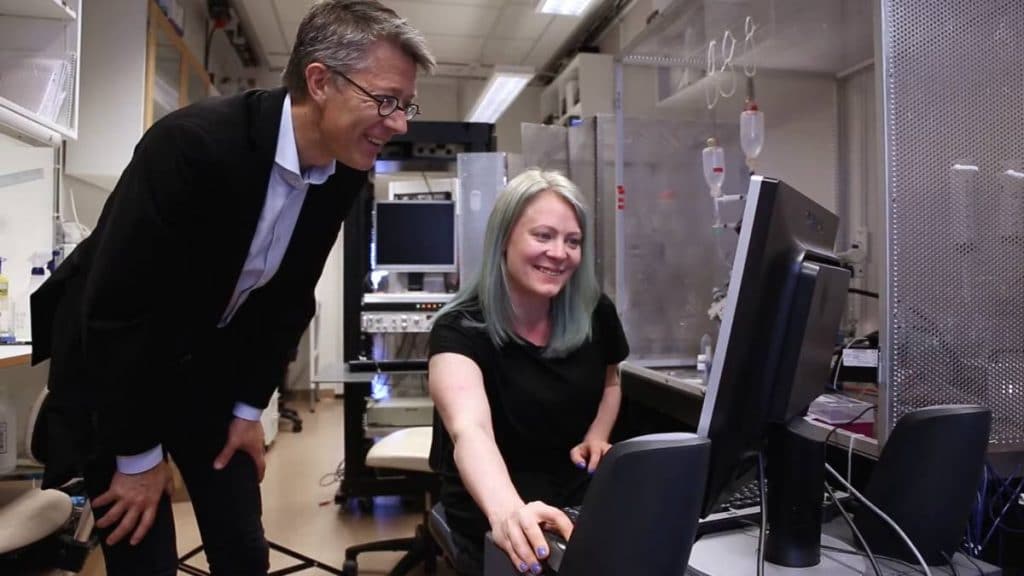
During the past two years, the DDD platform has been driving the Bridge Sweden project together with Testa Center and Stuns, among others, funded by Vinnova. In the context of the Bridge Sweden project, the DDD platform acquired CHOZN® GS-/- and CHOZN® CHO-K1 cell lines from Merck Life Science, which enables us to offer cell line development to our academic users. We can offer mini pools, produce GLP-grade tox batches and select GMP-ready high producing clones using the Cytena Up.Sight instrument. This strengthens our ability to support projects from discovery through to clinical material. Read more under the TPE unit or on the BRIDGE Sweden LinkedIn page.
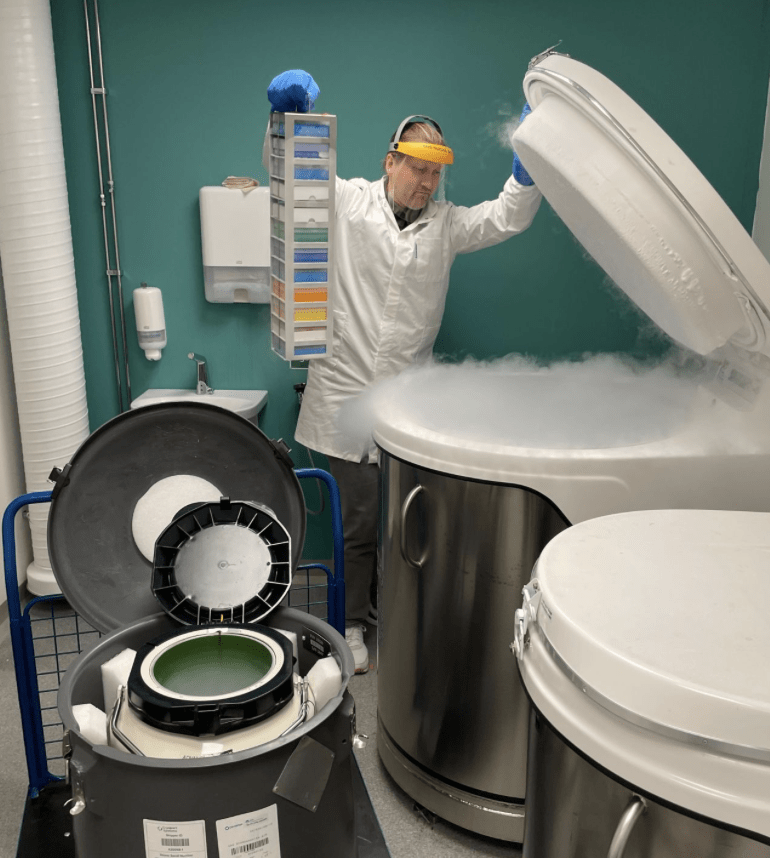
DDD employee Niklas Berndt Thalén opening the liquid nitrogen storage vessel for cells at SciLifeLab
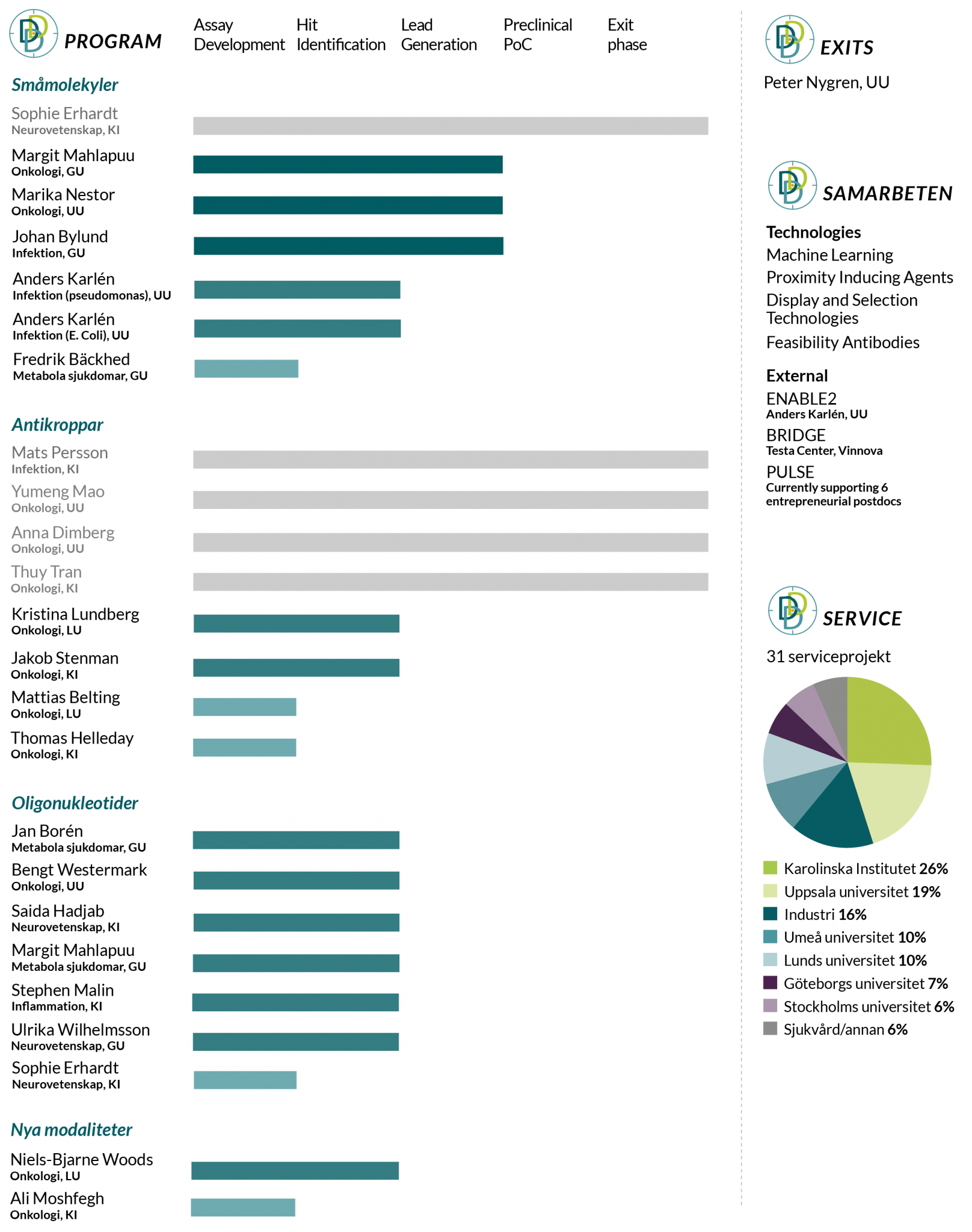
Achievements, testimonials and exits
Achievements and Testimonials

“We couldn’t have done this project without SciLifeLab. To begin with, we didn’t even know which things we didn’t know, so to speak. Nor did we have the funds to be able to do it ourselves. The vast competence of the DDD platform scientists has been invaluable to us.”
Olle Hernell (Umeå University)
“To have access to the expertise and techniques provided by the DDD was critical for us in order to be able to advance our research.”
Tina Sarén (Uppsala University)
Project exits
| Year | Principal Investigator | Affiliation | Therapeutic area | Project Type |
|---|---|---|---|---|
| 2025 | Peter Nygren | Uppsala University | Oncology | Small Molecule |
| 2024 | Göran Landberg | Gothenburg University | Oncology | Small Molecule |
| 2023 | Jens Carlsson | Uppsala University | Infectious Diseases | Small Molecule |
| 2023 | Thoas Fioretos | Lund University | Oncology | Antibody |
| 2022 | Marika Nestor | Uppsala University | Oncology | Antibody |
| 2021 | Thomas Helleday | Karolinska Institute | Oncology | Small Molecule |
| 2021 | Maréne Landström | Umeå University | Oncology | Antibody |
| 2021 | Sara Mangsbo | Uppsala University | Oncology | New Modalities |
| 2020 | Mattias Hallberg | Uppsala University | Neuroscience | Small Molecule |
| 2020 | Magnus Essand | Uppsala University | Oncology | New Modalities |
| 2019 | Susanne Lindqvist | Umeå University | Autoimmune Diseases | Antibody |
| 2019 | Sonia Lain | Karolinska Institute | Oncology | Small Molecule |
| 2018 | Margit Mahlapuu | Gothenburg University | Metabolic Disorders | Small Molecule |
| 2018 | Per Almqvist | Karolinska Institute | Neuroscience | New Modalities |
| 2017 | Maria Eriksdotter | Karolinska Institute | Neuroscience | Small Molecule |
| 2016 | Mårten Fryknäs | Uppsala University | Oncology | Small Molecule |
| 2016 | Johan Flygare | Linköping University | Blood Disorders | Small Molecule |
| 2016 | Thomas Helleday | Karolinska Institute | Oncology | Small Molecule |
Featured publications
A paper titled “An Adaptable Antibody-Based Platform for Flexible Synthetic Peptide Delivery Built on Agonistic CD40 Antibodies” was recently published in Advanced Therapeutics, with many contributors from the DDD Platform. This work was the result of a successful project owned by Sara Mangsbo and her colleagues, which made an exit in 2021.
Other recent papers of interest:
Izadi A, Karami Y, Bratanis E, Wrighton S, Khakzad H, Nyblom M, Olofsson B, Happonen L, Tang D, Sundwall M, Godzwon M, Chao Y, Toledo AG, Schmidt T, Ohlin M, Nilges M, Malmström J, Bahnan W, Shannon O, Malmström L, Nordenfelt P. The hinge-engineered IgG1-IgG3 hybrid subclass IgGh47 potently enhances Fc-mediated function of anti-streptococcal and SARS-CoV-2 antibodies. Nat Commun. 2024 Apr 27;15(1):3600.
Sarén, T., Saronio, G., Marti Torrell, P. et al. Complementarity-determining region clustering may cause CAR-T cell dysfunction. Nat Commun 14, 4732 (2023).
Luttens, A., Gullberg, H., Abdurakhmanov, E., et al. Ultralarge Virtual Screening Identifies SARS-CoV-2 Main Protease Inhibitors with Broad-Spectrum Activity against Coronaviruses. JACS 144, 7 (2022).